
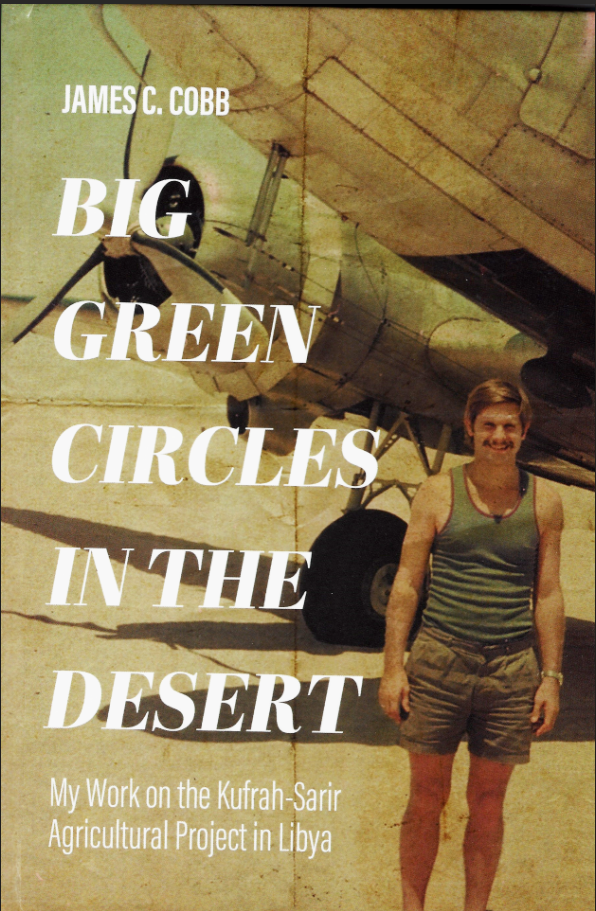
Big Green Circles in the Desert: My Work on the Kufrah-Sarir Agricultural Project in Libya
I wrote Big Green Circles in the Desert because I had a small window into events in the Middle East that attracted worldwide attention and I wanted to preserve my stories. In the 1970s, I was a young geologist starting my first big job which was to drill wells in the Sahara Desert for water to raise crops of alfalfa. The pivot irrigators sprayed water in a circle creating green circles in the desert when the alfalfa grew. The green circles became prime targets for space shuttle astronauts because of the contrast between the desert sand and the green alfalfa. I encountered PLO fighters in Beirut, Col. Qaddafi in Benghazi, faced dangers in the desert, and a whole United Nations of workers and colleagues doing the work. Along with stories of my encounters, I took pictures of ancient historic sites, desert scenes, and work on this interesting and innovative project. For those not planning a trip to Libya, this book is an opportunity to see Roman and Greek ruins in Libya and Lebanon, and desert environments that most people will never have a chance to see.
James C. Cobb, the author
December, 2025
COLLECTION
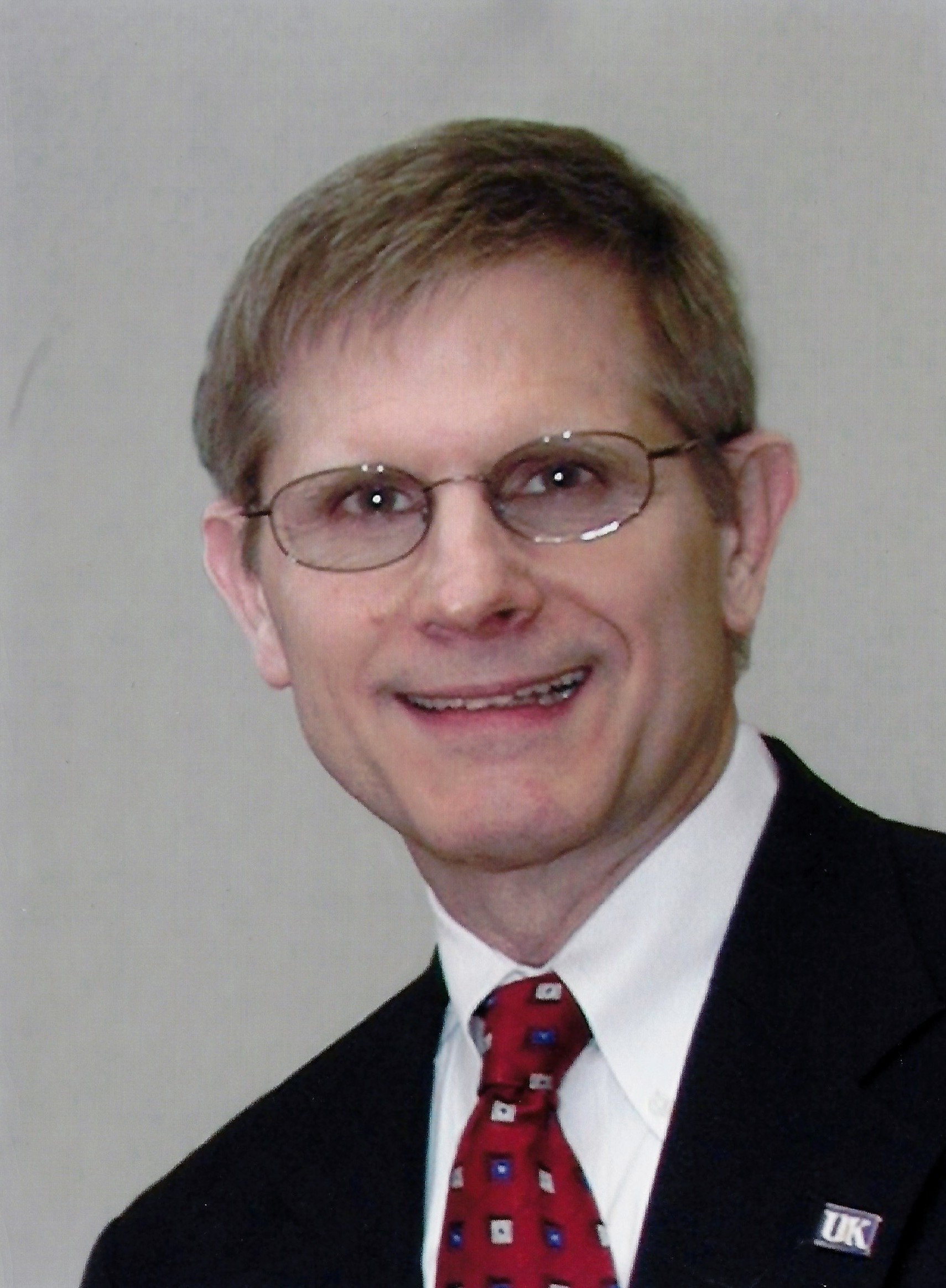
Hello, I'm James
This is my story.
James Cobb began his career in geology in the Middle East in 1970s. His job took him to the Sahara Desert to monitor water well drilling and assess geology for pivot irrigation. The company office was in Beirut when the Palestinian Liberation Organization (PLO) ruled over the city, had refugee camps, and was in constant conflict with Israel. He had encounters with a host of fascinating and newsworthy personalities of that time. He recorded these encounters and took Kodachrome slides of places in the Sahara Desert and the Middle East.
Together with his descriptions of people, places, and geology he shares images from places he worked. The Arab Oil Embargo and war on energy motivated him to pursue a Ph.D. in fossil energy. He became state geologist of Kentucky, authored papers, and wrote the chapter on coal for World Book. He looks back at his time in the Middle East as a time of closeup experiences with the never-ending turmoil of that region but incredible personal growth. This book attempts to describe his experiences.
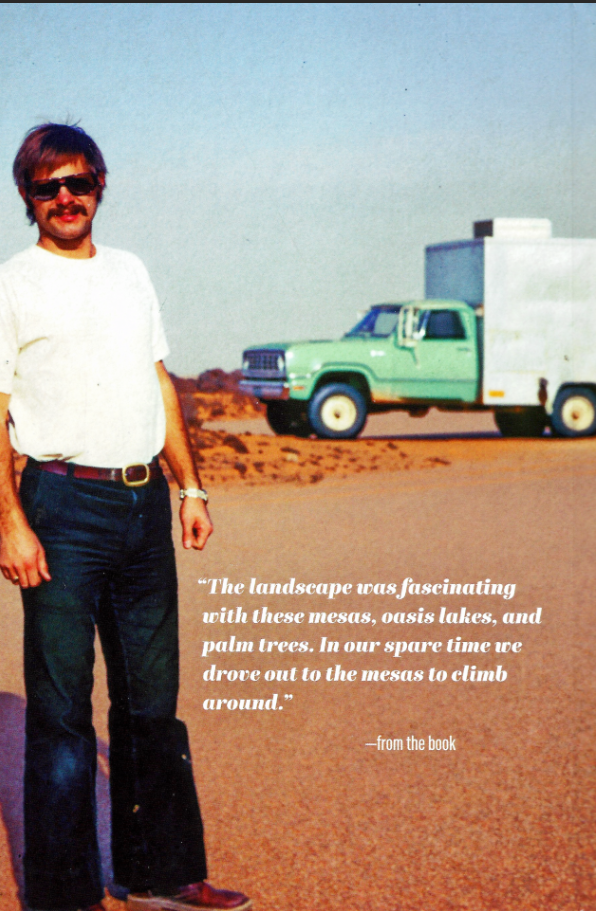
Quotes from my book.
On July 7, 1974, at about 10:30 p.m. just after twilight turned to night, I was asking myself, “will I get out of this alive.” I was lost in the Sahara Desert with a driver who didn’t speak English; without a map, water, or food.
The Kufrah-Sarir water project was important to Col. Muammar Qaddafi and he promoted it as an example of the good he was doing for Libya with his oil revenues. Thanks to the Sarir oil field, Libya had become the largest oil producer in Africa.
The Arab Oil Embargo in 1973-74 helped steer me into fossil fuels – coal geology and the U.S. response produced jobs that paved the way for my career. Conditions continued to deteriorate in Beirut after I left there in 1975.
The soldier at this outpost allowed us to stay at his camp for the night. I got the idea from my driver he would help us get to our camp the next day. I thought to myself, “Why did I get myself into this, I haven’t even started my work yet?”
To drive in or out of Foster’s Beirut apartment, which I did often, I had to pass a PLO checkpoint at the refugee camp with guards armed with AK-47 rifles. They weren’t aggressive to us but were usually bored, so they requested we get out of our car and sit to talk.
Israeli war planes flew over Beirut office at what seemed like tree top level. They came in very fast and low often breaking the sound barrier scaring people and causing windows and doors to shake. The sonic booms were loud and strong enough to be felt and startled everyone.
The project’s objective was to construct 100 water wells 36 inches in diameter, 1,000 feet deep, and cased with fiber glass well casing. High-capacity submersible pumps would then be installed and connected to pivot irrigation machines. The circular irrigated fields were to grow alfalfa for feeding sheep.
I was in the hotel lobby waiting for a ride to the project office when Libyan soldiers came in and forces each guest in the lobby to sit. They stood in front of each of us so we could not get up. They sealed off the coffee shop, dining room, and elevators. We were not allowed to move. Col. Qaddafi and his entourage came in and went up the elevator to the meeting rooms on the mezzanine level.
He spoke perfect English and let me know how angry he was about our lack of work and the difficult position his company was in. He said to me, “you are a nice young man, and I do not blame you personally,” and then he said, “we do not sue like in the US but settle things the Lebanese way.” I knew he meant violence – we could expect a bomb or shooting at our office or car. He said, “If I was you, I would leave Beirut.”
Some of the men got out to look around. I was logging a well nearby, so my truck was in the area. The men saw my van and walked over to ask what I was doing. One of the men stuck his hand out to shake hands and ask me in heavily accented English where I was from. I told him I was from America, the USA. He looked surprised and gave a big smile and asked my name. I told him, “I am Jim Cobb from Illinois and a geologist for the project.”
Our first mishap was losing our water. The water cooler flew out the back of the Land Rover when we ran over a pipeline buried just beneath the sand but not obvious enough to be seen before it was too late. It was like hitting a speedbump at 50 miles per hour. When we hit the pipeline, the vehicle bucked violently, and the five-gallon cooler was ejected out the back. The lid popped off and the water ran out before we could stop and recover the cooler. It was a shock, and I was scared knowing we had no water.
As it became dark, we took turns climbing onto the hood of the Land Rover to look for lights with binoculars that I had brought. I suspected my driver’s backup plan was to get to the vicinity of the Sarir camp and look for lights from the drill rigs with 80-feet-tall masts that were lit at night. He was counting on spotting a rig that would show us the way to the camp. Even standing on the hood of the vehicle with binoculars we could see nothing. We were lost in the vast Sahara Desert! We drove in the darkness, literally driving blind for about an hour until we finally saw a light and drove to it.